The Ultimate Costa Rica Surf Guide
You might know Costa Rica for its jungle and cloud forests. Its sloths, scarlet macaws, wild-eyed frogs, and endless troops of monkeys. Its volcanoes and its coffee. But do you know it for its waves? Because Costa Rica is, quite honestly, a wave magnet.

With world-class spots on both the Caribbean and the Pacific side, this little country hands you an embarrassment of surf riches. Add the (not-so-famous) second-longest left-hander in the world to the mix, and we might just have you booking the first flight to the land of Pura Vida. So here they are: our favorite surf spots all along beautiful Costa Rica, from the beach breaks of Guanacaste to the jungle point breaks of the Osa Peninsula.
Costa Rica is also home base for us. Our Costa Rica surf retreat sits in the rolling hills of Punta Banco, a stone’s throw from Pavones, so a lot of what’s below comes from years of scoring (and getting skunked) up and down these coasts. If you’d rather have the whole thing planned for you, we also build tailor-made and bespoke surf trips all over the country.

Costa Rica surf info at a glance
Costa Rica has two very different coastlines, and they’re on opposite schedules. The Pacific coast (where the vast majority of the surf lives) runs roughly 1,000 km from Guanacaste in the north down to Pavones in the far south, and it’s blessed with warm water and consistent swell more or less year-round. The Caribbean coast is shorter, moodier, and far less surfed, but when it turns on in the dry season it produces some of the heaviest waves in Central America.
- Water
- 26–29°C / 79–84°F
- You need
- Rash guard; booties only for the reefs
- Biggest swell
- April–October
- Easiest waves
- December–April
The water is warm enough to surf in boardshorts or a bikini all year (roughly 26–29 °C / 79–84 °F), so leave the wetsuit at home and pack a rash guard and reef booties instead. Swells are biggest and most powerful from around April to October, while the Pacific dry season (December to April) tends to serve up cleaner, mellower, more beginner-friendly conditions. More on that in When to visit.
Whatever your level, there’s a wave for you here. Below we’ve mapped out the coast roughly north to south along the Pacific, then hopped over to the Caribbean.
Guanacaste & Nicoya
Warm, sandy and consistent. This is where most people learn to surf in Costa Rica, and where a lot of them decide to stay a bit longer.

Playa Tamarindo
- Level
- All levels
- Tide
- All tides
- Swell
- Picks up most
- Bottom
- Sand
Tamarindo is where surfing in Costa Rica went mainstream, and for good reason. The main beach break is about as friendly and forgiving as waves come: sand-bottom peaks that roll in gently and hand you wave after wave of whitewater to practice your pop-up on. It’s one of the best beginner spots in the country, working on pretty much all tides and picking up most swells. There are surf schools on every corner to prove it, though.
More experienced surfers head to the north end, where the Tamarindo River estuary sandbar throws up a longer, punchier wave, best on a mid to high tide with a S–SW swell (cross the estuary by boat, though, as it’s home to crocodiles). Touristy as the town is, it’s also the launch pad for the boat trips to Witch’s Rock and Ollie’s Point, so its location is unbeatable.
Witch's Rock & Ollie's Point
- Level
- Confident intermediate and up
- Tide
- Varies
- Swell
- S–SW, offshore
- Access
- Boat, full day
No Costa Rica surf guide would be complete without a nod to the two waves that The Endless Summer II made famous. Both sit inside Santa Rosa National Park in the far north of Guanacaste, and both are reached by a boat trip (usually out of Tamarindo or Playas del Coco), so plan a full day and pack your snacks.
Witch’s Rock (Roca Bruja) is a fast, hollow, offshore-groomed beach break that breaks right in front of a dramatic monolith rising out of the water. When a solid S–SW swell hits and the wind stays offshore, it serves up punchy, barreling A-frames that are best suited to confident intermediates and up. Ollie’s Point, a little further up the coast, is the opposite in character: a long, peeling right-hand point break that just keeps going and going. It needs a good south swell to get working, but when it does, it’s the kind of wave you’ll be talking about for years. A boat day out here is a rite of passage for anyone surfing the north.
Playa Grande
- Level
- Intermediate to advanced
- Tide
- Incoming mid
- Swell
- Catches plenty
- Bottom
- Sand
Just across the estuary from Tamarindo (but a world away in vibe) lies Playa Grande, part of the Las Baulas Marine National Park and one of the country’s key leatherback turtle nesting beaches. Because it’s protected, there’s no development right on the sand and no crowds in the water, which is a rare treat this close to Tamarindo.
The wave itself is a powerful, consistent beach break with multiple peaks scattered along the beach. It catches a ton of swell, holds size well, and offers both lefts and rights, with the occasional hollow section when the sand cooperates. It’s best on a mid tide and suits intermediate and advanced surfers who want a bit more push than Tamarindo delivers. Do note the beach has rules around lights and access during turtle nesting season (roughly October to March), so read the signs.

Nosara / Playa Guiones
- Level
- Beginner to intermediate
- Tide
- Incoming mid
- Swell
- Almost anything
- Bottom
- Sand
If Tamarindo is where you learn, Nosara is where you improve. The main break at Playa Guiones is a long, sand-bottom beach break with peaks spread out enough that the crowd never piles up in one spot. It’s remarkably consistent, picking up almost any swell going, which makes it the perfect wave to surf twice a day and actually feel yourself getting better.
It’s beginner-friendly on the smaller days but has plenty of size and power for intermediates when the swell fills in. Playa Guiones works best on a pushing mid tide with an offshore morning wind (Nosara’s mornings are famously glassy). The town itself is Costa Rica’s wellness capital: expect yoga, smoothie bowls, dirt roads, and a deeply laid-back, jungle-fringed vibe.
Planning your next surf trip?
Save this guide on Pinterest so you can easily find it again.
Save on Pinterest

Hotels & restaurants in Nosara
Nosara is the most polished surf town in Costa Rica. Beautiful boutique hotels, premium villas, and an abundance of great restaurants covering just about every cuisine you can think of. We loved staying at The Nomadic, a small and intimate hotel with that barefoot luxury vibe we fall for every time. It sits right between the best shops and restaurants in town, and it’s only a few minutes’ walk from Playa Guiones.
Getting hungry? Make sure to check out La Ventanita, Coyol (a must), and La Luna.


Sámara
- Level
- First-timer
- Tide
- Forgiving
- Swell
- Needs a decent one
- Bottom
- Sand, bay
Sámara is the spot you send your parents, your partner who’s never surfed, or yourself on a day when you just want zero drama. Tucked into a gentle horseshoe bay and protected by an offshore reef and a little island (Isla Chora), the water is calm, the waves are small and rolling, and the sand bottom is as safe as it gets, making it one of the best places in the country to catch your very first green wave.
Because the bay is so protected, it needs a decent swell to come to life, and even then it stays mellow. Chasing more power? The punchier beach and river-mouth break at nearby Playa Camaronal is worth the short trip for confident surfers. But for learners, longboarders, and slow-living surf days, sleepy little Sámara is hard to beat.

Santa Teresa
- Level
- All levels
- Tide
- Varies by peak
- Swell
- Consistent
- Bottom
- Sand
Santa Teresa might just be the most popular beach destination in all of Costa Rica, and its dozens of beach breaks for every level are a big part of the appeal. Whether you’re a wobbly beginner at Playa Hermosa or a barrel-hunter at Playa Santa Teresa, this stretch of the Nicoya Peninsula will spoil you with waves, food, and palm-lined sunsets.
There’s far too much good surf (and even better food) here to cram into one section, so we gave it a guide of its own. Read our full Santa Teresa: The Ultimate (Surf) Guide for the complete rundown of where to surf, stay, and eat.


Hotels & restaurants in Santa Teresa
If it’s eat, sleep, surf, repeat you’re after, book your stay at Lucero Surf Vacations. This bohemian little boutique spot is the perfect place to rest your head after a long surf session. Comfy rooms, a refreshing pool, and a great surf guide (one of the owners) on hand whenever you need him. It’s within walking distance of multiple breaks and all the good restaurants, so you can leave the quad rental alone.
Our picks? Katana, Ani’s, and The Bakery, with plenty more in our Santa Teresa guide.


The Central Pacific
Long left-handers and heavy beach breaks. This is where the coast starts asking more of you.
Boca Barranca
- Level
- Longboard and intermediate
- Tide
- Mid
- Swell
- Big S–SW
- Bottom
- River mouth point
A little further north, near Puntarenas, sits one of Costa Rica’s classic waves: Boca Barranca. This river-mouth point break is one of the longest left-handers in the country, peeling for hundreds of meters on the right swell and giving longboarders and cruisy intermediates the kind of ride that makes your legs burn in the best way.
It comes alive on a big S–SW swell and is best on a mid tide. It’s not the cleanest water in the country (it is a river mouth, after all), and it can get a local crowd, but for a long, mellow, workable left, it’s a bucket-list wave worth ticking off on the drive south.

Playa Hermosa (Jacó)
- Level
- Advanced
- Tide
- Mid
- Swell
- S–SW, holds size
- Bottom
- Sand, heavy
A list of Costa Rica’s best surf spots wouldn’t be complete without Playa Hermosa. Don’t get confused, though: there are several Playa Hermosas spread along the Pacific coast. We’re talking about the one just south of Jacó. Where Jacó itself is a spot you’d rather skip, you can’t say the same about Playa Hermosa, as long as you like your waves on the serious side.
Playa Hermosa is not for the faint-hearted. It’s a powerful, fast, often close-out beach break that breaks hard and heavy, and plenty of surfers have left this beach carrying their board home in two pieces. It works best on a mid tide with a S–SW swell, and it holds size beautifully. Come here when you’re ready to test yourself, not when you’re learning to stand up.

Hotels & restaurants in Playa Hermosa
Looking for a warm welcome after a day full of surf? Big comfy beds, good showers, and a relaxing pool? Encantada Ocean Cottages is your best choice in the Playa Hermosa area. It’s a small setup, with only eight cabinas spread around an ever-inviting pool. All of them are just footsteps from the empty beach. Waves roll in out front and hammocks sway in the wind all around the property. The food is absolutely delicious, too: they run a farm-to-table concept with lots of local produce, and anything that comes off their grill just leaves you wanting more.
There are plenty of eateries in Playa Hermosa and Jacó, but our absolute favorite is Graffiti Resto + Bar. Incredibly kind staff, a good wine list, and mouthwatering dishes. Definitely give the slow-roasted pork ribs or the beer & brown-sugar sirloin a try; you won’t be disappointed. Do stop by their neighbors at Puddle Fish as well. It’s a local brewery that knows the drill and has its priorities exactly where they should be. Closed? They’re either brewing, surfing, or sleeping.


Dominical
- Level
- Intermediate and up
- Tide
- Mid
- Swell
- Magnet, S–SW
- Bottom
- Black sand
Dominical is a laid-back little surf village just off the Costanera, with peaks scattered along a long stretch of black sand. It’s a swell magnet, which makes it both fun and occasionally humbling. Small days are friendly and best on a mid tide; a proper S–SW swell turns it fast, heavy, and rippy, for confident intermediates and up.
When it’s too big to be fun, drive five minutes south to Dominicalito, a sheltered bay whose right-hand point peels long and mellow on exactly the swells that shut the main beach down. Watch for crocs near the river mouth after heavy rains, and bring the mosquito spray. We were eaten alive. For where to stay and eat around here, read our Uvita & Dominical: The Ultimate Guide.



 Reading tide charts on holiday?
We know these coasts. Let us line up the week.
Our retreat is based in Punta Banco, a stone’s throw from Pavones. Local coaches, spots picked for the conditions of that week, and no logistics for you to sort out.
See the Costa Rica retreat
The South: the Osa Peninsula
& Golfo Dulce
The end of the road, in the best way. Jungle points, almost no one out, and the longest left in warm water.
Cabo Matapalo
- Level
- Intermediate to advanced
- Tide
- Mid–high
- Swell
- Solid S–SW
- Bottom
- Rock & reef
This hidden gem on the tip of the Osa Peninsula (the one on the Golfo Dulce, not its namesake near Dominical) quietly stole a piece of my heart the first time we set foot here. While living in the Pavones area, we’d often boat over to surf its right-hand point breaks, and every time I fell for it a little harder. There’s hardly anything out here: a handful of eco-lodges, empty beaches, great waves, and an abundance of wildlife, so depending on the season it can be just you in the lineup with the turtles and whales.
Matapalo is all about right-hand points over rock and reef. The most user-friendly is Pan Dulce, a long, mellow right that’s a dream for longboarders and intermediates on a mid to high tide, while Backwash and the aptly named King Kong step it up: faster, heavier, and needing a solid S–SW swell to really roar. It’s at its best on bigger southern swells in the green season, and worth every bump in the road to get there.

Pavones
- Level
- Intermediate to advanced
- Tide
- Mid
- Swell
- SW, bigger the better
- Bottom
- Rock point, left
Oh, Pavones. The second-longest left-hander in the world, and the longest in warm water, is simply not to be missed. Tucked away as far south as you can go in Costa Rica, this gem of a wave doesn’t pull the crowds you’d expect. When the southwest swell kicks in and the sets start marching, all three sections of the wave connect and you can ride this bad boy for well over a kilometer. Your legs will give out before the wave does.
Of course, when conditions line up perfectly, people fly in from all over. But even on a mediocre day with far fewer people out, this wave delivers. Even as a regular, this endless left still leaves me grinning like an idiot. We might be a little biased, having lived here for three years and seen all its good days (and its bad ones), but Pavones is special.
Want the full story on the wave, the town, and the long dirt road to get there? We wrote a whole love letter to it: read our Pavones surf guide. And if you’d like to actually stay and surf it with us, this is exactly where our Costa Rica surf retreat is based.

Hotels & restaurants in Pavones
We have a few favorites in this area that we’ve written about before. A once-in-a-lifetime experience is staying at Sola Vista Eco Lodge, whose completely open bamboo houses overlooking the jungle and the Pacific are a genuine dream. The hosts, Renato and Denise, will make you feel right at home and can help you with anything.
Looking for a bite? Check out Café de la Suerte for breakfast and lunch, Tico Mex for fish tacos and margaritas, and La Bruschetta / La Piña for delicious pizza and the shrimp gnocchi.



The Caribbean Coast
A different country entirely, and on the opposite clock. Reggae, Afro-Caribbean food, and the heaviest wave in Costa Rica.

Puerto Viejo
- Level
- Season dependent, mostly intermediate to advanced
- Season
- Dec–March
- Swell
- Northern winter
- Bottom
- Sand & coral
While most surfers who visit Costa Rica head straight for the Pacific, they’re missing a whole other side of the country over on the Caribbean. The chilled-out little town of Puerto Viejo is a true backpacker’s hangout with reggae in the air, Afro-Caribbean food, and seriously fun waves in season (roughly December to March, with a smaller window around June).
For most levels the main event is Playa Cocles, a beginner-to-intermediate beach break that turns punchy and hollow when the swell fills in. And for the brave there’s Salsa Brava, Costa Rica’s heaviest wave: thick right-hand barrels over a shallow, razor-sharp coral reef that don’t forgive mistakes. Experts only; everyone else watches from the beach, beer in hand.

Restaurants in Puerto Viejo
Puerto Viejo has an abundance of restaurants, but we’ve got a few favorites. Head to Puerto & Co for healthy vegan breakfasts, cakes, and super-fast wifi; to Tierra Madre for the most delicious margaritas and equally yummy dishes; or to El Refugio Grill for a romantic dinner of Argentinian-inspired food and really good wine.
There’s much more to this coast than we can fit here, so we gave it its own deep dive: read our Caribbean coast of Costa Rica guide.
More Costa Rica surf spots
worth chasing
Costa Rica has so much coastline that no single guide could ever cover it all. A few more spots high on our list, and worth building a trip around:
Playa Negra
A world-class right-hand reef break made famous by The Endless Summer II. Fast, hollow, and barreling over rock and reef, it’s best on a mid to high tide with a S–SW swell, and it’s strictly for advanced surfers. Nearby Playa Avellanas (“Little Hawaii”) mixes beginner-friendly beach breaks with a punchy reef for when you want options.
Playa Marbella & Playa Junquillal
Exposed, powerful beach breaks that catch a lot of swell and stay refreshingly uncrowded, for intermediates and up who like to hunt.
Playa Avellanas to Playa Camaronal
A string of consistent beach and river-mouth breaks between the big-name towns, perfect for a road trip with a 4×4 and a cooler.



Want us to take care of it?
Two ways to surf Costa Rica with us.
We lived here for three years. Whichever route you pick, you get the same local knowledge, just packaged differently.

Our Costa Rica surf retreat
Our favourite place in the hills of Punta Banco, a stone’s throw from Pavones. You join a small group, we run the week.
- All levels, coaching split by ability
- Stay, meals, boards, activities and transfers included
- One of us there the whole week

A tailor-made trip through Costa Rica
Explore Costa Rica off the beaten path. Bring your crew, pick your dates, and we’ll show you the spots you’re not likely to find yourself. Stay put or road-trip the coast, and be as adventurous as you wish.
- Solo, couples, families or a crew
- Stays, coaching, chef and transport arranged
- We plan it, you just show up
Bigger group, a company trip or a celebration? That’s our Bespoke Surf Experiences side.
Every spot at a glance
Twelve breaks, side by side. Pick a level, a tide, a coast, and jump straight to it.
| Spot | Level | Tide | Swell | Bottom |
|---|---|---|---|---|
| Playa TamarindoGuanacaste | All levels | All tides | Picks up most | Sand |
| Witch’s Rock & Ollie’s PointGuanacaste | Confident intermediate and up | Varies | S–SW, offshore | Boat, full day |
| Playa GrandeGuanacaste | Intermediate to advanced | Incoming mid | Catches plenty | Sand |
| Nosara / Playa GuionesGuanacaste | Beginner to intermediate | Incoming mid | Almost anything | Sand |
| SámaraNicoya | First-timer | Forgiving | Needs a decent one | Sand, bay |
| Santa TeresaNicoya | All levels | Varies by peak | Consistent | Sand |
| Boca BarrancaCentral Pacific | Longboard and intermediate | Mid | Big S–SW | River mouth point |
| Playa Hermosa (Jacó)Central Pacific | Advanced | Mid | S–SW, holds size | Sand, heavy |
| DominicalCentral Pacific | Intermediate and up | Mid | Magnet, S–SW | Black sand |
| Cabo MatapaloThe South | Intermediate to advanced | Mid–high | Solid S–SW | Rock & reef |
| PavonesThe South | Intermediate to advanced | Mid | SW, bigger the better | Rock point, left |
| Puerto ViejoCaribbean | Season dependent, mostly intermediate to advanced | Dec–March | Northern winter | Sand & coral |
Swipe the table sideways on a phone.
When is the best time to surf in Costa Rica?
The short answer: Costa Rica has surf all year. On the Pacific, December to April is the driest and most beginner-friendly stretch, and May to November brings the bigger south swells. The Caribbean runs on its own clock, with its best waves from December to March. The better answer depends on which coast you choose and, crucially, on your level.
- Dry season, best for beginners
- Green season, biggest swells
- Wettest and biggest
- Caribbean prime
- Caribbean second window
Dry season on the Pacific
Best for beginnersLocally known as verano (summer), this is the sunny, blue-sky, offshore-wind stretch. Swells tend to be smaller and cleaner, the wind grooms the waves for much of the morning, and the whole coast feels a touch more manageable. This is prime time for beginners and improvers: cleaner faces, mellower peaks, and reliable conditions to build your confidence at spots like Tamarindo, Nosara, and Sámara. It’s also high season, so towns are busier and prices are higher, and you’ll want to be on it early to beat both the crowd and the midday onshore wind.
Green season on the Pacific
Best for intermediate +Don’t let the word “rainy” scare you off. The invierno months bring the biggest, most powerful south and southwest swells of the year, and the coast lights up, especially the south. This is when Pavones and Cabo Matapalo really turn on, and when intermediate and advanced surfers get the pumping, longer-period swells they came for. Mornings are often dry and glassy, with the rain saving itself for the afternoon, and the crowds thin out while the jungle turns impossibly green. Bring a light rain jacket, embrace the mud, and enjoy some of the best (and emptiest) waves of the year. Note that September and October are the wettest, biggest months on the Pacific, epic for experienced surfers, less ideal for first-timers.
The Caribbean is on the opposite clock
Northern winterThe Puerto Viejo side is at its best during the Pacific’s dry season, roughly December to March, when strong swells wrap into the reef and Salsa Brava starts throwing barrels. There’s often a smaller secondary window around June to August. If you’re chasing the Caribbean specifically, plan around the northern-hemisphere winter.
Water temperature
No wetsuit neededWarm year-round, roughly 26–29 °C (79–84 °F). Boardshorts or a bikini and a rash guard are all you need; pack reef booties for the reef breaks. And bring sunscreen/zinc. Lots of it.
 Prefer to skip the planning?
You bring the people. We handle every wave, meal and detail.
Reading tide charts and chasing offshore windows on your holiday isn’t everyone’s idea of a good time, and honestly, that’s kind of our whole thing. If you’d rather just show up and surf, our Costa Rica surf retreat puts you on the right wave at the right time, with the local knowledge already baked in. Traveling with a crew, a group of friends, a team, a brand? Our bespoke surf experiences are built around exactly that: you bring the people, we handle every wave, meal, and detail.
Learn more about our Surf Trips
How to get around
Costa Rica is bigger and slower to travel than the map suggests, so build in more time than you think you’ll need. You wouldn’t be the first to underestimate the distances. The best way to get around for a surf trip is by car.
Rent a 4×4. This is our number-one tip. The best waves in Costa Rica sit at the end of dirt roads (there’s a reason so many of them stay uncrowded), and river crossings, potholes, and steep jungle tracks are all part of the deal. A proper 4×4 with decent clearance turns “we can’t get there” into “let’s go check it.” It also gives you the freedom to chase swell up and down the coast, which is really how you surf this country.
Short on time? Sansa Airlines gets you a long way towards your surf destination. Be aware though, they’ve got a limit on luggage and you can only bring boards up to 6’7 ft.
Perfect waves and Pura Vida vibes
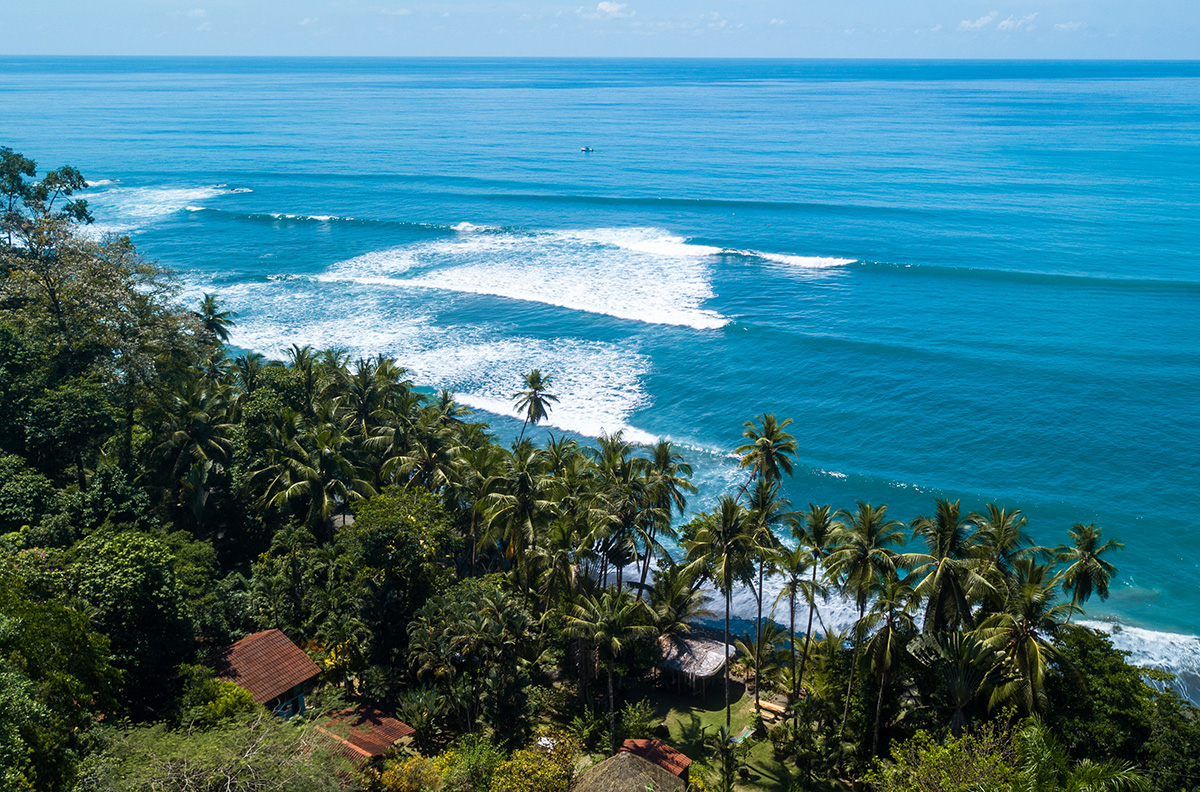
Costa Rica has many faces. Always friendly, always welcoming, and always with an abundance of Pura Vida vibes. Not just the people, but its nature, its waves, its coastal towns, its pace.
We decided to live in Costa Rica without ever visiting before. Little did we know back then how at home we’d feel. We improved our surfing, got to know many different surf spots and many different conditions. One crazy surf trip can change your life, apparently. So careful, when trying out all these amazing surf spots in Costa Rica. You might extend your stay a whole lot longer than you planned initially.
MarthePhotos by J. Roeland & M. Barends ©
This post contains affiliate links. If you book or buy through them we may earn a small commission, at no extra cost to you. We only recommend places we’ve stayed, eaten at, or surfed ourselves.